
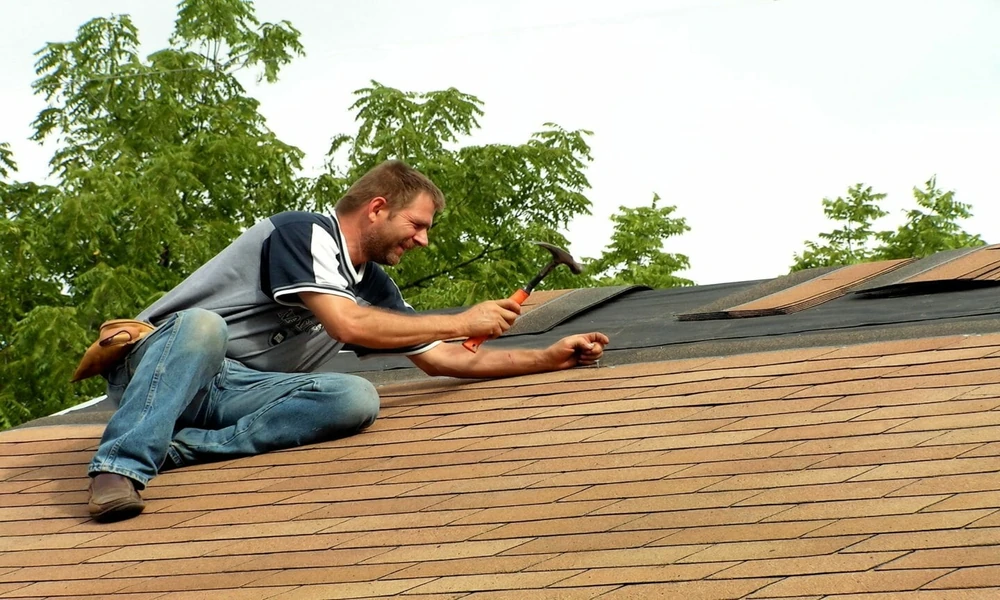
Water is patient. A roof that’s been quietly leaking behind your drywall for months will make itself known the week you’re hosting family for the holidays, usually as a brown stain spreading across a ceiling that was fine yesterday. Maryland gets slammed by nor’easters, summer thunderstorms, and hail in the same calendar year, and no shingle system lasts forever against that.
So you’re getting estimates. Good. That means you’ve already decided to fix the problem instead of staring at the stain like it’ll resolve itself, which is more than a lot of homeowners manage. Here’s what actually separates a roofer you’d recommend to your neighbor from one you’d warn them about. You’ll learn how to read an estimate, what to ask before anyone climbs a ladder, and where the real warning signs hide.
What Maryland weather does to your roof
Before you can judge whether a contractor knows what they’re doing, you should understand what your roof is up against. Maryland sits in a climate zone that swings hard. Freeze-thaw cycles in January and February work ice into the smallest gaps around flashing, then a 70-degree April afternoon lets it melt and seep inward. Summer brings UV baking that ages asphalt shingles faster than the manufacturer’s literature suggests.
This matters because a contractor who’s only ever worked in Arizona may not understand ice damming, attic ventilation, or the way a Mid-Atlantic winter punishes the valleys where roof planes meet. The National Weather Service tracks the severe weather patterns that shape local building practice, and any roofer worth hiring can talk about them in plain terms. Ask a candidate how they handle ice dam prevention. Vague answer, move on. Specific answer about underlayment and insulation, listen closely.
My honest take: local experience beats a slick national brand almost every time when you’re talking about residential roofing. The guy who’s re-roofed forty houses in your county has seen your exact attic design before.
How to vet a roofing contractor in seven steps
Skip the gut feeling and run this checklist instead. It takes about an hour total and it’ll save you thousands.
- Verify the license and insurance. Maryland requires home improvement contractors to be licensed, and you can check that status directly. Ask for a certificate of insurance naming you as a certificate holder, then call the insurer to confirm it’s current. This is non-negotiable.
- Confirm a physical local address. A PO box and a cell number is a man with a truck, not a business. Not automatically disqualifying, but it changes how you protect yourself on payment.
- Ask for three recent local references, then actually call them. Ask each one if the crew showed up when they said they would.
- Get the estimate in writing with materials, quantities, and disposal spelled out.
- Check the warranty terms for both materials and labor. They’re different warranties from different parties.
- Never pay more than a third up front. A deposit is normal. Asking for half in cash before delivery is a red flag.
- Read the change order process. Rot, bad decking, or a surprise chimney issue will come up. Know how those get priced before you’re mid-project.
The Bureau of Labor Statistics publishes wage and employment data across construction trades, and it’s a useful sanity check on whether a quote lines up with real labor costs. According to baseline wage data, roofing work is a skilled trade with real labor overhead, which means an absurdly cheap bid isn’t a bargain. It’s a sign someone’s cutting corners on labor, materials, or insurance.
Reading an estimate like a pro
An estimate that says “remove old roof, install new roof, $14,000” tells you almost nothing. A real one reads like a parts list. You want to see the shingle brand and product line, the underlayment type, the number of squares, whether drip edge and ridge vent are included, and what happens to the old shingles.
Watch for these, because each one is a place money quietly disappears:
- The word “approximately” next to square footage
- No mention of flashing replacement
- Decking replacement quoted separately without a per-sheet price
- A total that’s oddly round
Two estimates with a $6,000 gap deserve an explanation, not a shrug. Sometimes the difference is legitimate, like a premium shingle versus builder grade. Sometimes it’s one contractor planning to skip the ice and water shield. Ask the question directly and watch how they answer. The one who gets defensive is telling you something.
The red flags that should end the conversation
Every roofing scam I’ve heard about follows the same script. Someone knocks on your door after a storm, says they were “working in the neighborhood,” points at a few damaged shingles, and offers a deal that expires today. Storm chasing is a real and recurring problem in the mid-Atlantic, and it tends to spike after any event big enough to make the news.
Here’s my framework for spotting it, and I call it the Three Unmovables. Any single one of these is enough to walk away, no discussion needed.
Unmovable one: pressure to sign the same day. Legitimate contractors have backlogs. They don’t need an answer in your driveway.
Unmovable two: full payment requested before the work begins. A deposit protects them against a homeowner who flakes. Anything past that protects them against having to finish the job.
Unmovable three: no written contract, or a contract missing the license number, insurance details, and a start date. If they can’t put it on paper, they can’t be held to it.
The National Association of Home Builders maintains resources on hiring and working with contractors, and its guidance lines up with all three: the industry itself treats these as baseline expectations, not unreasonable demands. You can read more at nahb.org.
I’d rather you delay a roof for a month than hire wrong and spend two years fighting about it. A delay costs you nothing but time. A bad hire costs you the whole project.
What to do when you’ve narrowed it to two
You’ve got two licensed, insured, well-reviewed contractors with comparable written estimates. Now it comes down to communication, and that’s more predictive than you’d think. Call each office with one follow-up question about the estimate. Whoever answers clearly and promptly is probably who you’ll be dealing with when something unexpected happens at 8 a.m. on install day.
Then ask about scheduling, crew size, and how they’ll protect your landscaping and gutters. Some homeowners in this region end up comparing outfits like MD Roofing, best roofing contractors against a couple of local independents, which is exactly the right instinct: get real quotes, put them side by side, and pick on substance rather than a handshake.
Frequently overlooked details
Two things homeowners almost always forget. First, ask about the permit and who pulls it. If the contractor asks you to pull the permit, that’s a licensing problem in disguise, and it puts the liability on your record instead of theirs.
Second, think about your attic. A new roof on a poorly ventilated attic will fail early, and no warranty covers that. Ask whether the estimate includes any ventilation assessment. If the answer is no, add it to your list of questions.
Roofing is one of the few home purchases where the cheap option costs the most over time. Take the extra week. Make the calls. Read the paperwork twice. Your ceiling will thank you for it, and when the next storm rolls through, you’ll be the one sleeping through the noise.
What’s the one question you’d add to this list before you sign anything?